Tips and recommendations to raise and feed a safe and healthy baby
Feeding Your Baby
Raise a Healthy Baby
Keep Your Baby Safe
Feeding Your Baby
Look for Cues
Babies know when they need to eat. Weight gain and growth are the best indicators that your baby is getting enough to eat.
Hunger cues include:
Sucking on fist
Clenching hands
Turning towards the breast or bottle
Fullness cues include:
Falling asleep
Relaxing hands
Closed mouth
Age
Frequency of Feedings
Amount Eaten (per feeding)
0-4 Months
Every 2-3 hours
2 to 3 oz
4-6 Months
Every 3-4 hours
4 to 6 oz
WIC recommends waiting until your baby is 6 months old to introduce solid food. Your baby’s doctor will let you know if it is safe to do so earlier.
Breastfeeding
Breastfeeding protects your baby from infections, and it has nutrients and antibodies that your baby needs for healthy growth. Breastfeeding keeps mom and baby close.
For breastfeeding struggles, WIC offers peer counselors.
Watch your baby, not the clock. Breastfed babies eat differently than babies who receive a bottle.
Let your baby take the lead.
Offer skin to skin. If they are hungry they will move their head around and squirm.
For latching remember the Snuggle Poem: Tummy to mummy, Nose to nips,Flex the hips, To open the lips.
The baby’s head is free to tilt back slightly, so that the baby gets enough space to open wide and take the breast.
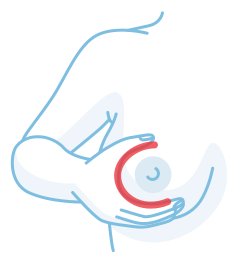
In the beginning, if your baby needs help latching, support your breast with the “C hold” or “U hold”
C Hold
U Hold
For latching remember the Snuggle Poem: Tummy to mummy, Nose to nips,Flex the hips, To open the lips.
The baby’s head is free to tilt back slightly, so that the baby gets enough space to open wide and take the breast.
Storing Breastmilk
Location
Fresh
Thawed
Room Temperature
Up to 4 hours
1 to 2 hours
Refrigerator
Up to 4 days
Up to 24 hours
Freezer
Up to 6 months
Do NOT refreeze
Deep Freezer
Up to 12 months
Do NOT refreeze
Raise a Healthy Baby
Play With Your Baby
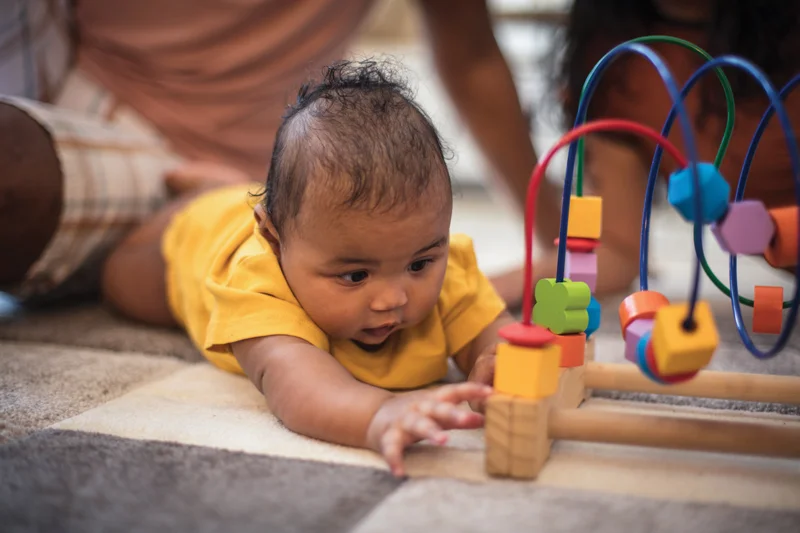
Tummy Time
Letting your baby spend time on his or her tummy builds head, neck, and upper body strength. It also puts them in position to learn to crawl.
Toys
Give your baby age-appropriate toys that offer a variety of textures and sounds.
Gaining Weight
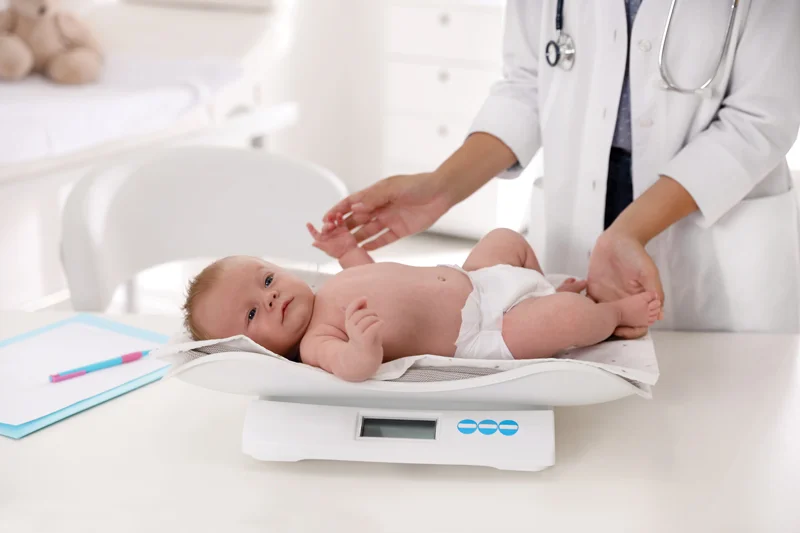
Expect changes in growth rate as your infant grows. It is common for infants to lose weight after birth, but they should gain it back by two weeks of age.
It is also common for an infant to double their birth weight by 6 months of age.
Continue attending regular wellness visits with your child’s pediatrician to ensure adequate weight gain.
Bodily Functions
Spit Up
It is common for infants to spit up part of their milk.
To minimize spit up:
Feed your infant before they get too hungry
Ensure feeding sessions are quiet and calm
Feed smaller amounts more frequently
Do not feed laying down
Do not play energetic games up to 30 minutes after feeding
Contact a doctor if spit up is dark green or has blood in it.
Contact a doctor if spit up is dark green or has blood in it.
Gas
Sometimes infants need help with gas. Burp infants after feeding. Excessive gas can lead to colic—a condition marked by endless, excessive crying that affects about one in five infants.
Bowel Movements
Infants may pass one or more bowel movements a day. Sometimes they do not poop for several days. Hard, dry stools are a sign of constipation, which usually happens when infants do not get enough milk.
Keep Your Baby Safe
Food Safety
Wash Your Hands
Washing hands helps prevent the spread of germs.
Handling Milk
Avoid using a microwave to warm milk – it could burn your baby’s mouth.
If using formula, follow the directions on the label.
Immunizations
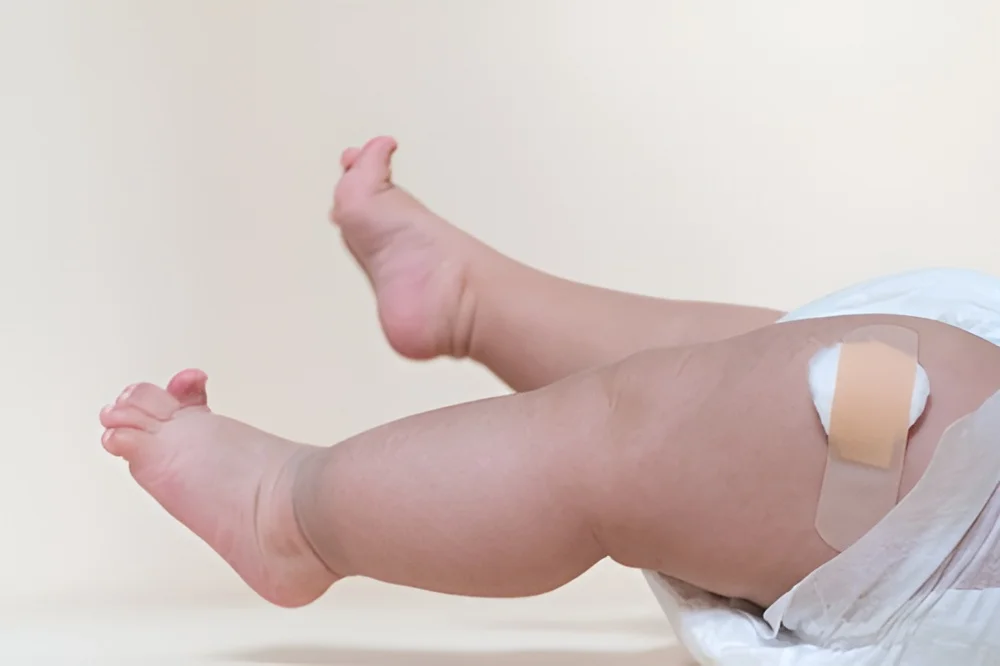
Immunizations protect your baby from diseases. It also helps protect communities and schools.
In the first 6 months, your baby should receive these immunizations:
Hepatitis B
Rotavirus
DTaP (Diphtheria, Pertussis, and Tetanus)
Pneumococcal disease
Polio
Haemophilus influenzae (Hib)
Self Soothing
Pacifiers are one way for a baby to self-sooth. If you are breastfeeding, it’s best to wait about 3 to 4 weeks – or until breastfeeding is going well – before offering a pacifier to help avoid nipple confusion. If your baby is fully bottle-fed, you can introduce a pacifier from birth.
Pacifier use after one year of age can lead to:
Dental issues
Increased ear infections
Sleep Safe
Babies should sleep:
A - Alone, on their
B - Back, and in their
C - Crib
Make sure your baby sleeps on their back in an empty crib. Bedding, pillows, or stuffed animals can suffocate the baby.
Keep Smoke Away
Do not use: alcohol, cigarettes, vapes, illegal drugs, unprescribed medications, etc.
Secondhand smoke will hurt your baby. Using drugs will impair your ability to care for your baby.